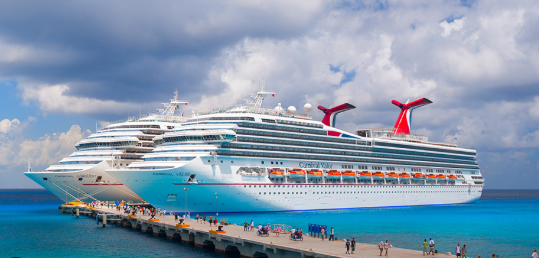
The cruise industry has experienced major changes over the past several years. Strong vacation demand, higher travel spending, new private destinations, fuel costs, and large corporate debt levels can all influence the financial performance of cruise companies.
Carnival stock represents ownership in Carnival Corporation, one of the world’s largest cruise companies. The shares are commonly identified by the CCL ticker. Investors follow cruise bookings, ticket prices, onboard spending, debt reduction, fuel expenses, earnings, and passenger demand when analysing the business.
This guide explains Carnival Corporation, its cruise brands, financial performance, stock price factors, recovery strategy, growth opportunities, and major investment risks.
What Is Carnival Stock
Carnival Corporation is a publicly traded cruise company.
CCL is the ticker commonly followed by United States investors.
| Detail | Information |
|---|---|
| Company | Carnival Corporation |
| Stock ticker | CCL |
| Exchange | New York Stock Exchange |
| Industry | Cruise and leisure travel |
| Main business | Cruise vacations |
| Revenue sources | Tickets and onboard spending |
| Major risk | Debt and travel demand |
| Stock volatility | Can be significant |
The exact share price changes throughout market trading.
What Does CCL Mean in Stocks
CCL is the stock ticker associated with Carnival Corporation shares traded on the New York Stock Exchange.
Ticker symbols help investors identify companies.
A person searching CCL on a financial platform is generally looking for Carnival market information.
The ticker can be used to review price history and financial data.
Investors should confirm the company and exchange before making any transaction.
What Is Carnival Corporation
Carnival Corporation is a global cruise vacation company.
The business operates multiple cruise brands.
Its ships travel to destinations around the world.
The company earns money by selling cruise vacations.
Passengers can also spend money on food, drinks, entertainment, excursions, internet packages, and other onboard services.
This combination of ticket and onboard revenue is important to Carnival’s business model.
Carnival Cruise Brands
Carnival operates a portfolio of cruise brands.
These brands target different passenger groups and travel markets.
The portfolio includes Carnival Cruise Line, Princess Cruises, Holland America Line, Costa Cruises, Cunard, AIDA Cruises, Seabourn, and P&O Cruises.
Some brands focus on mainstream vacations.
Others serve premium or luxury travellers.
A diversified portfolio allows the company to reach different customers.
How Carnival Makes Money
Cruise ticket sales are a major revenue source.
Passengers pay for cabins and cruise itineraries.
Onboard spending provides additional revenue.
Guests may purchase beverage packages.
Specialty dining can generate sales.
Casino activity and shore excursions may also contribute.
Internet services and other experiences create additional spending opportunities.
Increasing passenger spending can improve revenue even when ship capacity changes slowly.
Why Is Carnival Stock Popular
Carnival is one of the best-known cruise companies.
The shares attract investors interested in travel and leisure businesses.
Strong cruise demand has increased market attention.
The company’s financial recovery also creates investor interest.
Debt reduction is another major part of the investment story.
However, cruise companies are exposed to economic and operational risks.
Popularity should not replace financial research.
Carnival Stock Price
The share price changes during market hours.
Investors should use current financial market information when checking an exact quote.
Historical prices can provide useful context.
They should not be treated as current values.
The shares may move after earnings reports.
Fuel price changes can also influence investor sentiment.
Travel demand and geopolitical developments may affect the market outlook.
Why Does Carnival Stock Move
Stock prices reflect investor expectations.
Strong bookings can support positive sentiment.
Higher cruise prices may improve revenue expectations.
Rising fuel costs can increase expenses.
Economic concerns may create questions about consumer travel spending.
Debt developments can influence valuation.
Earnings results and company guidance are also important.
One daily stock movement can have several causes.
Carnival Q2 2026 Results
Carnival reported record revenue of $6.7 billion for the second quarter of 2026.
Net income was $537 million.
Record adjusted net income reached $569 million.
Adjusted net income increased by more than 20 percent compared with the prior year.
Diluted earnings per share were $0.39.
Adjusted earnings per share were $0.41.
The results demonstrated continued cruise demand while the company faced higher fuel expenses.
Carnival Revenue
Revenue measures money generated from company operations before expenses are deducted.
Carnival earns revenue from passenger tickets.
Onboard activities provide additional sales.
Higher ticket pricing can support revenue.
More passenger spending can also contribute.
Investors should compare revenue across several periods.
A single record quarter does not guarantee that every future quarter will establish a new record.
Carnival Net Income
Net income measures profit after applicable costs and expenses.
Carnival reported $537 million in net income for Q2 2026.
Adjusted net income was higher at $569 million.
Investors should understand the difference between reported and adjusted financial measures.
Adjusted figures can exclude certain items.
The company’s financial disclosures explain how management calculates non-GAAP measures.
Both reported and adjusted results can provide useful context.
Carnival Adjusted EBITDA
Adjusted EBITDA is a financial measurement frequently discussed by cruise investors.
Carnival reported record second-quarter adjusted EBITDA of $1.6 billion in Q2 2026.
The measure can help investors examine operating performance.
However, adjusted EBITDA is not the same as net income or free cash flow.
Debt and interest expenses remain important.
Investors should avoid evaluating a highly leveraged company using only one financial metric.
Carnival Customer Deposits
Customer deposits are important for the cruise business.
Passengers often book vacations before the sailing date.
Carnival reported all-time-high customer deposits of $9.0 billion in Q2 2026.
This was more than $450 million above the previous-year record.
High deposits can indicate strong booking activity.
However, deposits should not automatically be treated as completed revenue.
Cruises must still operate according to booking and accounting conditions.
Carnival Cruise Bookings
Bookings provide information about future passenger demand.
Carnival reported that its booked position for the remainder of 2026 was ahead of the prior year at historically high prices.
The company was approximately 93 percent booked for the year at the time of its Q2 results.
Demand for 2027 and later sailings was also running ahead of previous-year levels.
Investors should continue monitoring future booking trends.
What Are Net Yields
Net yield is an important cruise industry measurement.
It helps investors understand revenue performance relative to available passenger capacity.
Higher yields can indicate stronger pricing or passenger spending.
Carnival reported record net yields in constant currency for Q2 2026.
Net yields increased 2.2 percent.
The company described this as its twelfth consecutive quarter of record net yields.
Sustained yield growth can support profitability when costs remain controlled.
Onboard Spending
Passenger spending does not stop after a cruise ticket is purchased.
Guests can spend money during their vacations.
Food and beverage upgrades may create revenue.
Shore excursions can also contribute.
Casino and entertainment activities may generate sales.
Carnival reported strength in onboard revenue and pre-cruise onboard sales.
Growing onboard spending can improve revenue generated from each passenger.
Carnival Debt
Debt remains one of the most important issues for Carnival investors.
The cruise industry shutdown created major financial pressure.
Carnival raised capital and borrowed money to support its operations.
The company has since focused on reducing leverage.
Investors should examine total debt and net debt.
Interest expenses are also important.
A strong business recovery can provide additional cash for debt reduction.
Carnival Debt Reduction
Reducing debt is a major part of Carnival’s financial strategy.
Lower debt can reduce future interest expenses.
It can also improve financial flexibility.
Carnival reported a net debt to adjusted EBITDA ratio of 3.1 times in Q2 2026.
This represented improvement compared with the prior-year period.
Debt reduction should be evaluated over time.
Investors should examine actual balance sheet changes rather than relying only on management targets.
Carnival Dividend
Dividend payments are important to income-focused investors.
Carnival reinstated its dividend after the major disruption to the cruise industry.
The company’s 2026 investor presentation identified a quarterly dividend of $0.15 per share.
Dividend payments depend on company decisions and financial conditions.
A current dividend should not be considered permanently guaranteed.
Investors should review official shareholder information before expecting future income.
Carnival Share Buybacks
Companies can repurchase their own shares.
A buyback reduces shares outstanding when repurchased shares are retired or held according to the company’s capital structure.
Carnival reported more than $450 million in stock repurchases by June 23, 2026.
Share buybacks can return capital to shareholders.
However, investors should also consider debt and other capital requirements.
The price paid for repurchased shares can affect long-term value.
Carnival and Fuel Prices
Fuel is a major expense for cruise companies.
Ships require significant energy to operate.
Higher fuel prices can increase costs.
Carnival reported that fuel prices were nearly 30 percent higher during Q2 2026.
The company also reported a 5.6 percent improvement in fuel consumption per available lower berth day.
Efficiency improvements can partially reduce fuel cost pressure.
They cannot completely eliminate commodity price risk.
Geopolitical Risks
Cruise companies operate internationally.
Political conflicts can affect travel routes.
Passenger demand may change in affected regions.
Carnival reported that geopolitical volatility influenced booking trends for some European deployments, particularly Mediterranean sailings.
Companies may adjust itineraries when necessary.
Investors should understand that international travel businesses can be affected by events outside management’s control.
Economic Conditions and Cruise Demand
Cruises are generally discretionary purchases.
Consumers may reduce vacation spending during periods of economic weakness.
Inflation can affect household budgets.
Higher unemployment can also influence travel decisions.
However, cruise companies often compete with hotels and land-based vacations.
Pricing relative to other travel options can influence demand.
Investors should examine actual bookings instead of assuming that every economic slowdown will produce the same result.
Celebration Key
Exclusive destinations are becoming an important part of Carnival’s business strategy.
Celebration Key is a destination developed for Carnival Cruise Line guests in The Bahamas.
Private and exclusive destinations can provide differentiated vacation experiences.
They may also create additional spending opportunities.
Large destination investments require capital.
Investors should examine passenger demand and financial returns over time.
Carnival Fleet
Carnival operates a large global cruise fleet through its brands.
Different ships serve different markets.
Newer ships can provide modern entertainment and accommodation features.
Older ships may require maintenance and dry dock work.
Fleet planning affects capacity.
It can also influence capital expenses.
Investors should monitor ship orders, retirements, and deployment decisions.
New Carnival Ships
New ships can increase passenger capacity.
They may also introduce new experiences.
However, cruise ships are expensive.
Building additional vessels creates long-term capital commitments.
Carnival must balance growth with debt reduction.
The timing of ship deliveries can influence future capacity.
Investors should distinguish announced ships from vessels already operating commercially.
Carnival Destiny and Future Fleet Growth
Carnival continues planning future ship development.
The Carnival Destiny project represents part of the company’s next generation of ships.
Future vessels may provide additional capacity and new passenger experiences.
However, ship development takes several years.
Construction expenses and delivery schedules can change.
Future fleet growth should be evaluated alongside debt and cash generation.
Carnival vs Royal Caribbean
Carnival and Royal Caribbean are major cruise industry competitors.
Both companies operate large cruise businesses.
However, their brand portfolios and financial positions differ.
Comparing share prices alone can be misleading.
Investors should examine market capitalisation.
Revenue and debt are also important.
Passenger yields and profitability provide additional context.
A lower stock price does not automatically mean a company is cheaper.
Carnival vs Norwegian Cruise Line
Norwegian Cruise Line is another major cruise operator.
The companies compete for vacation spending.
Brand positioning can differ.
Fleet size and geographic exposure are also different.
Investors should compare debt levels and financial performance.
Booking trends can provide useful information.
The entire cruise sector can benefit from strong travel demand, but individual companies may produce different shareholder returns.
Carnival Stock Forecast
Stock forecasts vary between analysts.
Price targets can change after earnings.
Fuel prices may influence future estimates.
Cruise demand and financial guidance are also important.
No forecast guarantees a future market price.
Investors should examine the assumptions supporting a prediction.
A stock target without business analysis provides limited information.
Can Carnival Stock Reach $30
A $30 share price is possible, but no specific target can be guaranteed.
Strong earnings growth may support investor confidence.
Debt reduction could improve the financial outlook.
Continued booking demand may also be positive.
Higher fuel expenses could create pressure.
Economic weakness or geopolitical disruptions may affect travel demand.
Investors should consider market capitalisation and financial performance when evaluating a price target.
Can Carnival Stock Reach $50
A higher stock price would generally require stronger market expectations about Carnival’s future value.
Investors may look for continued profit growth.
Debt reduction could support valuation.
Strong cash generation may also be important.
However, a previous historical price does not guarantee a return to the same level.
Share counts and financial conditions can change over time.
A $50 target should therefore be analysed using current company information.
Will Carnival Stock Recover
Carnival’s business has demonstrated significant financial recovery from the cruise industry shutdown.
Revenue and passenger demand have improved.
The company has also reduced leverage.
However, future stock performance is not guaranteed.
Debt remains important.
Fuel prices can create pressure.
Travel demand can change.
Investors should focus on measurable financial progress across several quarters.
Is Carnival Stock a Good Long-Term Investment
The answer depends on an investor’s goals and risk tolerance.
Carnival provides exposure to global cruise travel.
Strong bookings and customer deposits can support the growth case.
Improving earnings and debt reduction are also important.
However, the company remains exposed to economic cycles, fuel prices, debt, and international travel disruptions.
Investors should consider both positive and negative scenarios.
Major Carnival Stock Risks
Debt remains a significant financial risk.
Fuel prices can increase operating expenses.
Economic weakness may reduce travel spending.
Geopolitical conflicts can affect itineraries.
Health events may influence cruise demand.
Ship incidents can create reputational concerns.
Competition can affect pricing.
Large fleet investments require substantial capital.
These risks can create share price volatility.
How to Research Carnival Stock
Start with the latest financial reports.
Review revenue and net income.
Examine customer deposits.
Study booking trends.
Monitor net yields.
Check debt and leverage.
Review fuel expenses.
Examine fleet and destination investments.
Compare financial performance with other cruise operators.
Use current company information because travel demand and operating conditions can change quickly.
Final Thoughts
Carnival stock represents a major global cruise business with exposure to passenger travel, onboard spending, exclusive destinations, and long-term vacation demand. The company’s record Q2 2026 revenue, stronger adjusted earnings, high customer deposits, and continued booking strength demonstrate significant operational progress.
Important risks remain. Debt, fuel expenses, economic conditions, geopolitical events, and travel demand can influence future results. Investors should evaluate Carnival’s earnings, leverage, cash generation, and confirmed booking trends rather than relying entirely on social media predictions or historical share prices.
Frequently Asked Questions
What is Carnival’s stock ticker?
Carnival Corporation shares are commonly traded on the New York Stock Exchange under the ticker CCL.
How does Carnival make money?
The company earns revenue from cruise tickets and passenger spending on onboard products, services, and experiences.
Does Carnival pay a dividend?
Carnival reinstated a quarterly dividend, but future dividend payments depend on company decisions and financial conditions.
Can Carnival stock reach $50?
The stock could move significantly, but no $50 target can be guaranteed.
Is Carnival stock risky?
Yes. Debt, fuel prices, economic conditions, geopolitical disruptions, and changes in cruise demand are important risks.