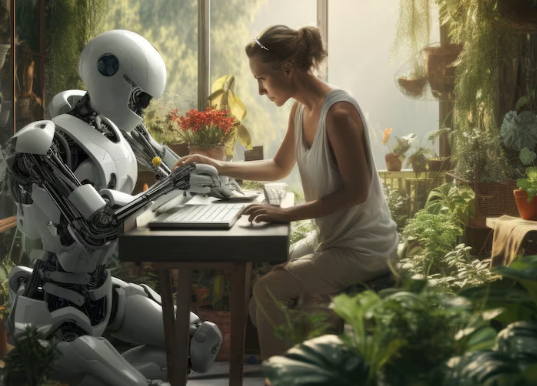
Artificial intelligence has moved from being a futuristic idea to becoming part of everyday life. People interact with AI in many ways without always realizing it. From voice assistants and personalized recommendations to navigation apps and online customer service, intelligent technology is quietly helping people complete tasks faster and make everyday decisions.
As AI continues to develop, its influence is expanding across homes, workplaces, schools, transportation, entertainment, and healthcare. Understanding how this technology works and where it is being used can help people make better decisions about the digital tools they use every day.
What Is Artificial Intelligence?
Artificial intelligence refers to computer systems designed to perform tasks that normally require some form of human intelligence. These tasks can include recognizing patterns, understanding language, analyzing information, making predictions, and responding to questions.
Modern AI systems can process large amounts of information quickly. Some systems use machine learning, which allows them to identify patterns from data and improve their performance over time.
AI does not necessarily look like a robot. In many cases, it exists as software running behind applications and online services that people already use.
AI in Smartphones and Personal Devices
Smartphones are among the most common places where people encounter AI. Many modern phones use intelligent systems for voice recognition, photography, security, and personalized features.
Voice assistants can understand spoken requests and perform tasks such as setting reminders, searching for information, sending messages, or controlling compatible devices.
AI also plays a role in smartphone cameras. Image processing systems can automatically recognize scenes, adjust lighting, improve details, and enhance photographs.
Facial recognition and other biometric technologies may also use AI to help authenticate users and protect personal devices.
AI in Online Shopping
Artificial intelligence has changed the way people shop online. Many websites analyze browsing behavior, previous purchases, searches, and product interactions to provide personalized recommendations.
For example, an online store may suggest products based on items a customer has previously viewed. These recommendations can make it easier to discover relevant products without manually searching through thousands of options.
AI is also used to manage inventory, predict customer demand, detect unusual transactions, and improve delivery planning.
AI in Entertainment
Entertainment platforms use AI to personalize the content people see. Streaming services can analyze viewing behavior and recommend movies, television programs, music, podcasts, or other content that may match individual interests.
Recommendation systems can save users time by filtering enormous libraries of content.
AI is also becoming increasingly important in content creation. Tools can assist with writing, image creation, audio production, video editing, and other creative tasks. These technologies are changing how individuals and businesses produce digital content.
AI in Education
Education is another area where artificial intelligence is creating new possibilities. AI-powered learning platforms can provide personalized exercises, explanations, and feedback based on a student’s needs.
Students can use intelligent tools to brainstorm ideas, practice difficult concepts, organize information, and receive explanations of complex subjects.
Teachers may also use AI to assist with administrative tasks, create educational materials, analyze learning patterns, and develop personalized activities.
However, AI should support learning rather than replace genuine effort. Students still need to develop critical thinking, creativity, research skills, and the ability to evaluate information independently.
AI in Healthcare
Healthcare professionals increasingly use AI for tasks involving data analysis, medical imaging, administrative work, and research.
AI systems can examine large datasets and identify patterns that may be difficult to detect manually. In certain medical applications, algorithms can assist professionals in analyzing images or identifying potential areas that require closer examination.
AI can also help reduce repetitive administrative workloads, allowing healthcare workers to spend more time on patient care.
Importantly, AI-generated information should not automatically be treated as a medical diagnosis. Professional judgment remains essential when making healthcare decisions.
AI at Work
Businesses across many industries are adopting AI to improve productivity. Employees can use intelligent tools to summarize information, organize documents, analyze data, draft content, automate repetitive tasks, and assist with customer communication.
Customer service is another major application. AI-powered chat systems can answer common questions and provide basic support at any time of day.
Rather than eliminating every human role, AI is often used to handle repetitive responsibilities while employees focus on tasks requiring judgment, communication, creativity, and specialized expertise.
The workplace is likely to continue changing as organizations discover new ways to combine human skills with intelligent software.
AI and Transportation
Navigation applications already use intelligent systems to help people find efficient routes. These tools can analyze traffic conditions, road information, and travel patterns to estimate arrival times and suggest alternative routes.
AI is also being developed for advanced driver assistance and autonomous transportation technologies.
These systems can analyze information from cameras, sensors, maps, and other sources to identify objects and understand road conditions.
As transportation technology develops, safety, regulation, reliability, and public acceptance will remain important considerations.
AI in Smart Homes
Artificial intelligence is making homes more connected. Smart thermostats can learn preferences and adjust temperatures automatically. Smart speakers can respond to voice commands, while security systems can identify unusual activity.
Home automation can make everyday routines more convenient. Lights, appliances, entertainment systems, and security devices can work together through connected platforms.
However, smart devices also collect data, so consumers should understand privacy settings and consider the security of the products they bring into their homes.
Benefits and Challenges of AI
Artificial intelligence offers several potential benefits. It can save time, automate repetitive tasks, process large amounts of information, personalize digital experiences, and support decision-making.
At the same time, AI creates important challenges. Privacy is a major concern because many intelligent systems depend on large amounts of data. Accuracy is another issue because AI can produce incorrect or misleading results.
There are also concerns about employment, bias, cybersecurity, misinformation, and the responsible use of automated decision-making.
For these reasons, people should use AI thoughtfully rather than assuming that every AI-generated result is automatically correct.
What the Future May Bring
The role of AI in everyday life is likely to expand. Future systems may become better at understanding natural language, assisting with complex tasks, and adapting to individual needs.
AI may become more deeply integrated into education, transportation, workplaces, homes, and public services.
The most important development may not be AI replacing people, but people learning how to work effectively with AI. Human judgment, creativity, empathy, and responsibility will remain valuable even as technology becomes more capable.
Final Thoughts
Artificial intelligence is already influencing many parts of modern life. It helps people communicate, shop, learn, work, travel, entertain themselves, and manage everyday tasks.
The technology offers significant opportunities, but it also requires responsible use. Understanding its benefits and limitations can help individuals make smarter choices and avoid relying on automated systems without proper judgment.
As AI continues to evolve, learning how to use it responsibly may become one of the most important digital skills of the modern era.